Img

Intentions In Architecture Norbergschulz Pdf Work ((link)) Today

Unified particle physics for Unity

Obi is the first dual CPU/GPU realtime particle physics engine for Unity:

  • Unified framework for character and interactive cloth, fluids, ropes, softbodies...
  • Advanced editor tools
  • Extremely performant, multithreaded solver
  • Two-way interaction with rigidbodies, supports all 3D collider types and most 2D ones.
  • From low budget, simple effects to extremely complex behavior
  • Latest research papers applied, based on cutting-edge technology
  • Easily extensible and modular architecture
  • Fast support and regular updates


Cloth

intentions in architecture norbergschulz pdf work

Rope

intentions in architecture norbergschulz pdf work

Fluid

intentions in architecture norbergschulz pdf work

Softbody

intentions in architecture norbergschulz pdf work

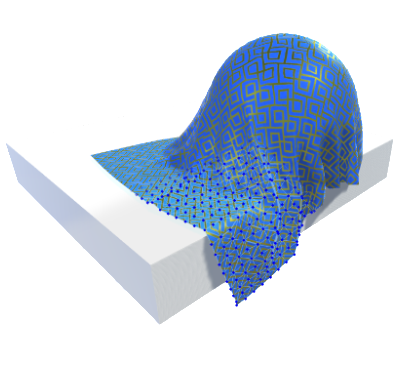
Obi Cloth

The most advanced cloth simulator for Unity. It brings back and improves pre-5.x cloth functionality.

  • Support for skinned meshes: unified solution for character clothing and regular cloth.
  • Cloth proxies: drive high resolution meshes using low-res simulations. Works with skinned meshes too!
  • Softbody physics trough volume constraints.
  • Independent stretch and bend constraints.
  • Cloth is attachable to rigid bodies.
  • Cloth can collide with itself and other cloth pieces.
  • Physically based aerodynamics model.
  • In-editor simulation preview.
  • Easy-to-use integrated editor tools, don´t ever leave Unity when authoring cloth.
  • Save your prefabs mid-simulation and instantiate them already warm-started.
  • Supports all standard Unity colliders.
  • Two-sided shader (based on the Standard shader) with correct lighting on backfaces.
  • Automatic camera culling.

More info!

intentions in architecture norbergschulz pdf work


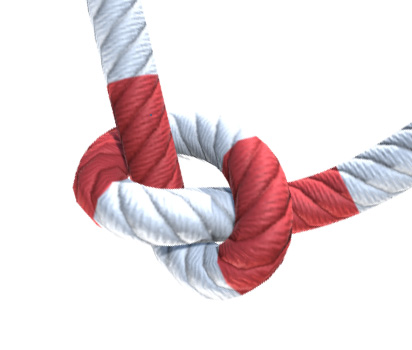
Obi Rope

Obi Rope will allow you to create realistic ropes and chains fast, with absolute control over their look.

  • Procedural smooth mesh generation using splines, complete with tangent space updating and normal map support. No need to manually generate geometry for your ropes.
  • Change rope length at runtime, Tearable/cuttable rope, Closed loops.
  • Modular solver: don't waste performance, only use the constraints your rope needs.
  • Bending constraints and per particle pin constraints.
  • In-editor simulation preview.
  • Easy-to-use editor particle tools: selection, brush selection, paintbrush, property smoothing...
  • You can save your ropes mid-simulation and instantiate them already warm-started.
  • Supports all standard Unity colliders.
  • Automatic camera culling: non-visible ropes do not update their simulation.

More info!

intentions in architecture norbergschulz pdf work


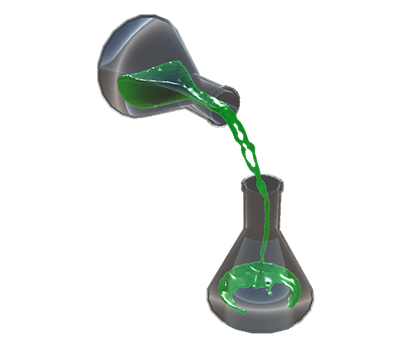
Obi Fluid

Obi Fluid is a fully-fledged 2D and 3D realtime fluid simulator for Unity.

  • All physical properties or the fluid are adjustable: surface tension, stickiness, vorticity...
  • Fluids can adhere to surfaces, form drops, split and merge...
  • Advect passive particles trough the fluid: bubbles, foam, dust...
  • Custom emitter shapes.
  • Two-way rigid body interaction.
  • Modular solver: don't waste performance, all parameters are exposed.
  • Supports high density ratios in multiphase simulations.
  • You can save your fluids mid-simulation and instantiate them already warm-started.
  • Supports many types of colliders
  • Automatic camera culling: non-visible fluids do not update their simulation.

More info!

intentions in architecture norbergschulz pdf work


Intentions In Architecture Norbergschulz Pdf Work ((link)) Today

┌──────────────────────────────┐ │ ARCHITECTURAL INTENTIONS │ └──────────────┬───────────────┘ │ ┌───────────────────────┼───────────────────────┐ ▼ ▼ ▼ ┌─────────────────┐ ┌─────────────────┐ ┌─────────────────┐ │ THE PHYSICAL │ │THE PSYCHOLOGICAL│ │ THE CULTURAL │ │ DIMENSION │ │ DIMENSION │ │ DIMENSION │ ├─────────────────┤ ├─────────────────┤ ├─────────────────┤ │ Building Tech │ │ Perception │ │ Shared Symbols │ │ Materials │ │ Spatial Behavior│ │ Social Values │ │ Climate Control │ │ Emotional Safe │ │ Historic Continuity│ └─────────────────┘ └─────────────────┘ └─────────────────┘ The Physical Dimension (Technical Control)

This exploration of how physical spaces impact the human psyche eventually evolved into his landmark 1979 book, Genius Loci: Towards a Phenomenology of Architecture . While Intentions looked at architecture through the objective lenses of psychology and semiotics, Genius Loci looked at it through the existential lens of Martin Heidegger's philosophy, focusing on the "spirit of place" and what it means for humans to truly "dwell." Why the Text Remains Relevant Today

Intentions in Architecture was his initial attempt to build a rigorous scientific and philosophical framework to restore meaning to built environments.

To understand the PDF or physical text of Intentions in Architecture , one must grasp these three pillars: 1. The Concept of "Place" (Genius Loci) intentions in architecture norbergschulz pdf work

However, the text has also faced criticism over the decades:

The work synthesizes Gestalt psychology, semiotics, and structuralism.

Intentions in Architecture: Analyzing Christian Norberg-Schulz’s Phenomenological Masterwork The Concept of "Place" (Genius Loci) However, the

The final sections apply this rigorous matrix to historical examples, demonstrating how different eras—from Classical antiquity to the Baroque and Modern periods—manifested their unique cultural schemata through architectural intentions. 5. Critical Reception and Impact on Modern Theory

The relative area of safety, familiarity, or distinct identity.

Christian Norberg-Schulz’s (1963) is a foundational work in architectural theory that shifts the focus from purely functional or aesthetic concerns to a comprehensive phenomenological approach . Critical Reception and Impact on Modern Theory The

I can provide targeted breakdowns to help with your or design theory research . Share public link

Published during the height of late Modernism, Intentions in Architecture emerged as a critique of the prevailing technocratic and purely functionalist approaches to design. Norberg-Schulz argued that the International Style had lost its connection to human meaning, reducing buildings to mere technical solutions.

Obi News in our Blog

All our assets