Hdmivies2 ((full)) -

OmegaT is a translation memory application that works on Windows, macOS, Linux… It is a tool intended for professional translators. It does not translate for you! (Software that does this is called "machine translation". OmegaT can interface to some machine translation programs or Internet services)

OmegaT is free software. That means that users like you can download and use it with no restrictions. You are also free to copy it and pass it on to other people and even modify OmegaT to suit your own requirements. A more detailed explanation of free software can be found on the Free Software Foundation website.

Professional features

  • Fuzzy matching
  • Match propagation
  • Simultaneous processing of multiple-file projects
  • Simultaneous use of multiple translation memories
  • User glossaries with recognition of inflected forms

Work with more than 30 file formats

  • Microsoft Office Word, Excel, PowerPoint (2007 or later)
  • XHTML and HTML
  • OpenDocument Format (native file format for LibreOffice, Apache OpenOffice)
  • MediaWiki (Wikipedia)
  • Plain text
  • …and around 30 other file formats

Powerful tools

  • Unicode support: can be used with various alphabets and scripts
  • Support for right-to-left languages
  • Integral spelling checker that uses Hunspell dictionaries (same as in other software such as LibreOffice or Mozilla FireFox)
  • Compatible with other translation memory applications via exchange formats such as TMX, TTX, TXML, XLIFF, SDLXLIFF
  • Interface to machine translation/neural machine translation software/Web services
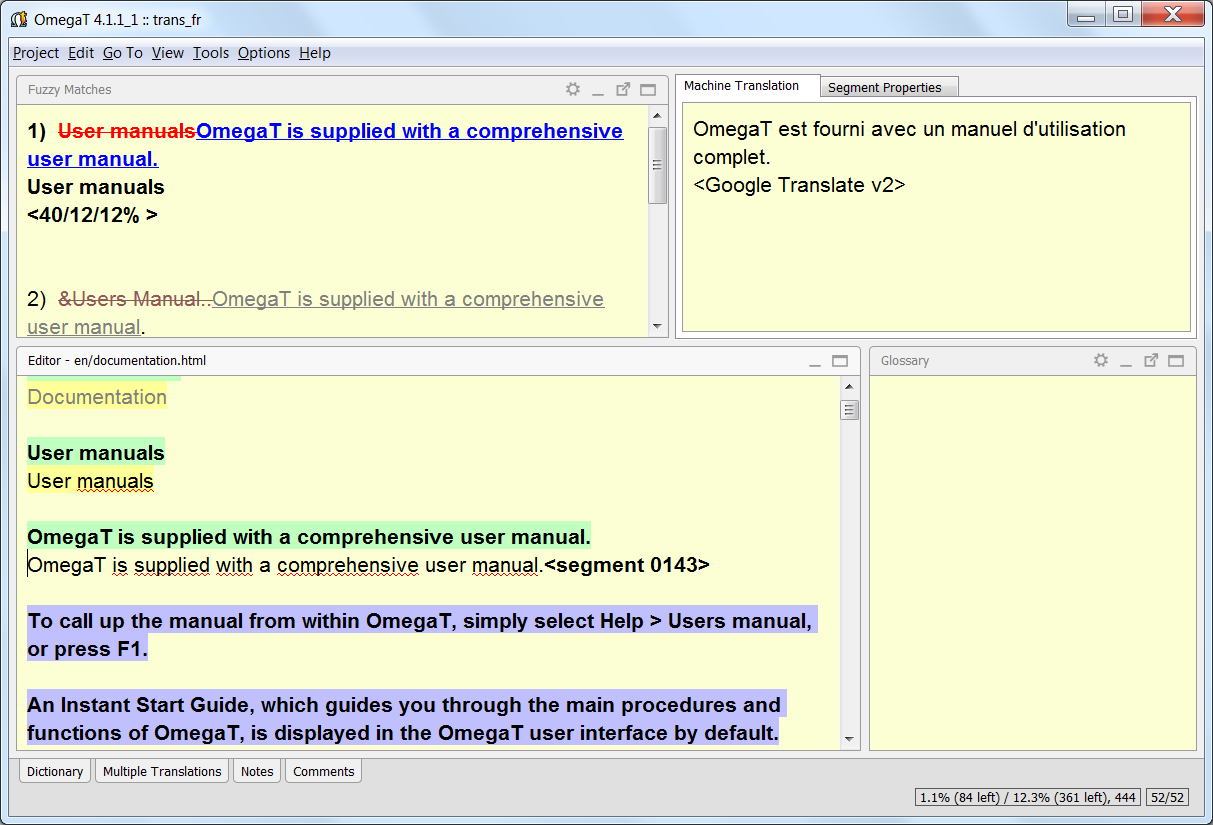
OmegaT Screenshot
 

Download

OmegaT is available in many different versions in order to suit a range of user requirements.

To find the version most suitable for you, follow the link below to the Download Selector.

Alternatively, if you already know which version you wish to download, click on the button to have an overview of the different OmegaT versions available.


Hdmivies2 ((full)) -

While popular for its free access, users and security reports highlight several significant drawbacks: Intrusive Advertisements : Reviewers on Trustpilot

By the climax, Maya isn’t just an editor. She’s a temporal signal surgeon. She splices frames of non-existence into the harvesters’ source code, watches them pixelate into silence. But the final future clip shows her holding the cable, smiling at the camera, saying: “You think this is the end? You’re the second person to watch this. I’m still editing.”

When users seek platforms under terms like "hdmivies2," they are tapping into a complex web architecture optimized for high-bandwidth data delivery. Delivering uncompressed or lightly compressed video files to millions of simultaneous users requires robust backend systems. 1. Content Delivery Networks (CDNs) hdmivies2

: A curated section that uses TMDb data to highlight "top-rated but low-budget" films that users might have missed in the main trending lists. 📱 User Experience Enhancements

The "HD" in HDMovie2 is often misleading. The quality of the video files can vary wildly, and you may end up with a poor viewing experience filled with buffering or a low-resolution picture. Furthermore, many of the download links are fake or lead to even more dangerous websites. While popular for its free access, users and

Why are users searching for "hdmivies2" instead of just opening Prime Video? Based on user testimonials and deep-web reviews, here are the standout features:

The proliferation of disjointed search terms points to a larger fragmentation in the digital entertainment industry. With numerous independent production companies operating their own standalone platforms, viewers frequently use broad search queries to locate where specific media assets are hosted. But the final future clip shows her holding

: The underlying infrastructure relies on a vast web of mirror domains. When a regulatory body issues a cyber-injunction against one extension (e.g., .tc , .is , or .to ), the database instantly migrates to a backup configuration.

If you’ve encountered this term in a pop-up ad, a download link, an email, or a third-party website, . Common tactics include using misspelled or slightly altered names of trusted technologies (like “HDMI” or “Movies”) to trick users into downloading harmful files.